The Roof
In February 2026, while investigating the recurring ground fault shutdowns, I commissioned a drone survey of the roof to examine the physical condition of the 15-year-old installation. What the high-resolution photography revealed is a second, independent failure: a pattern of installation defects that violate California building codes and Tile Roofing Industry Alliance (TRI) standards — defects that have been silently compromising my roof since 2011.
The 23-Panel Plan vs. 17-Panel Reality
The original Solar Power Service Agreement specifies system parameters consistent with a 23-panel installation. However, only 17 panels were actually mounted — arranged in two strings of 11 and 6 across two roof planes. The drone survey reveals why: the installers drilled lag bolt penetrations for the full planned array, then abandoned at least six mounting locations without ever installing racking or panels. These orphan penetrations were smeared with mastic sealant and left in the roof — creating unprotected water intrusion points that have been exposed to the elements for 15 years.
The installers did not remove the unused lag bolts or install proper repair flashing over the abandoned holes. They simply daubed sealant over them and moved on. Whether this was due to a last-minute design change, structural concerns, or simple negligence, I was left with a roof full of unflashed penetrations serving no purpose.
Photographic Evidence
The following drone photographs document the installation deficiencies. Click any image to view the high-resolution version.
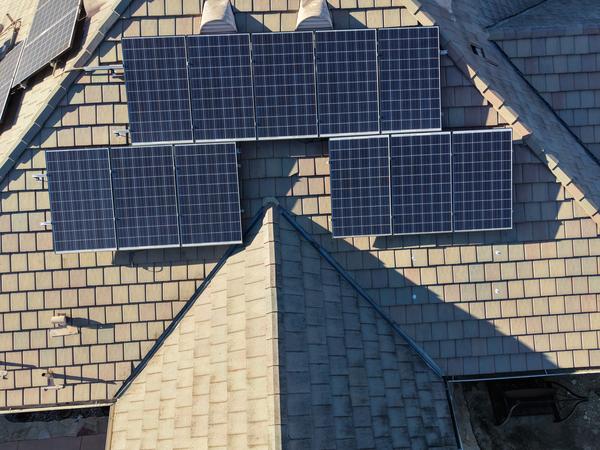
String 1: 11-Panel Array
Aerial view showing the primary array mounted on the larger south-facing roof plane. This string carries 2,640W of the system's 4,255W DC capacity. Note the metal racking brackets visible between tiles at each mounting point — none of which have proper sub-tile flashing.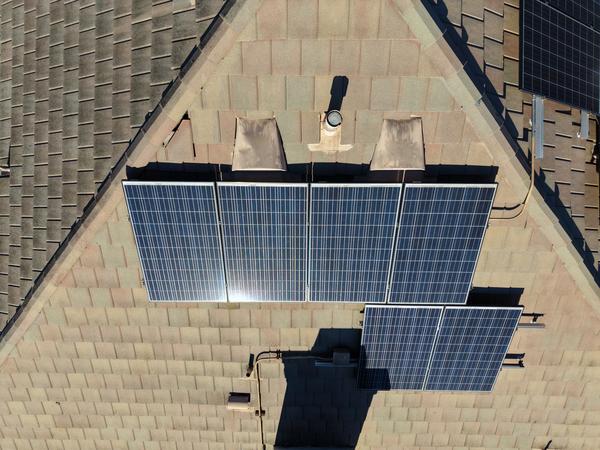
String 2: 6-Panel Array
Aerial view showing the secondary array on a separate roof plane near roof vents and plumbing penetrations. This string carries 1,440W. The proximity of the panels to the ridge and multiple existing roof penetrations further complicates the water management on this plane.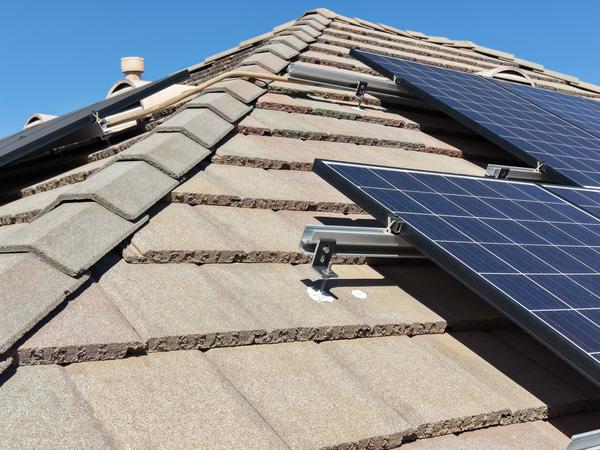
Missing Metal Flashing — Detail View
Close-up of lag bolt roof mounts with racking attached. The bolts penetrate directly through the concrete tiles with no metal roof membrane flashing underneath. Instead, mastic sealant (the white blobs visible around each mount) was applied as a substitute. Mastic is not UV-stable and degrades over time — it is not an approved flashing method under California Title 24 building code or TRI installation standards. The displaced tiles around each mount indicate the penetrations were not properly seated, creating channels for water entry.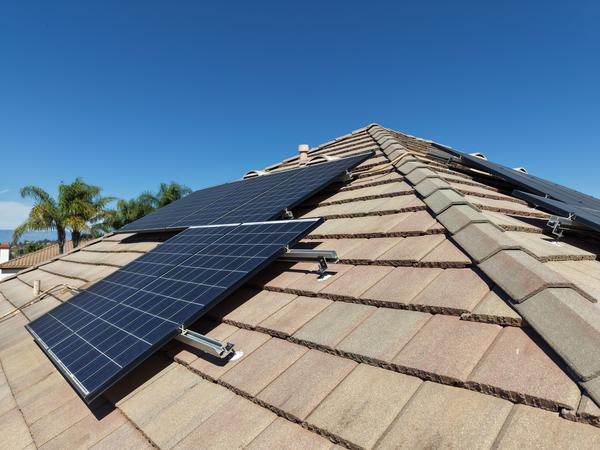
Missing Metal Flashing — Systematic Pattern
Wider angle showing multiple lag bolt mounts across the array, all exhibiting the same deficient sealant-only approach. No racking mount on any roof plane has proper metal flashing. This confirms the condition is systematic, not isolated — the installation crew used mastic in lieu of code-required flashing as their standard practice across every penetration point.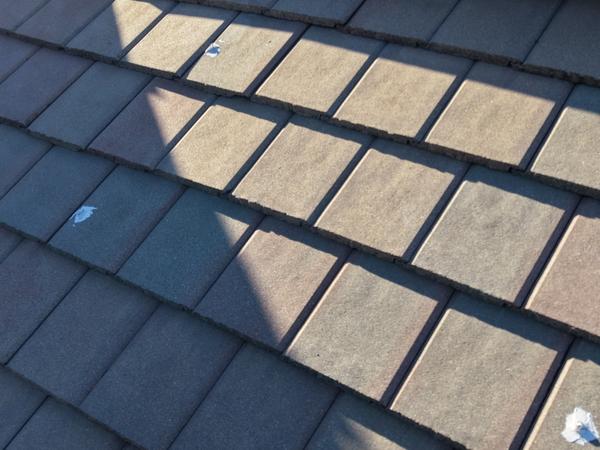
Abandoned Roof Penetrations — Drilled, Sealed with Mastic, Never Used
This is the most damning photograph. Several lag bolt penetrations are clearly visible in the concrete tiles, sealed only with mastic sealant, but with no racking, no panels, and no purpose. These are "orphan" penetrations — holes drilled through the roof tiles by the installation crew and then abandoned. This likely explains the discrepancy between the planned 23-panel system and the 17 panels actually installed: the installers drilled the full array's worth of mounting points, then reduced the panel count without repairing the unused holes. These unflashed, purposeless penetrations have been exposed to weather, UV degradation, and thermal cycling for 15 years, allowing water to intrude into the underlayment and roof structure underneath.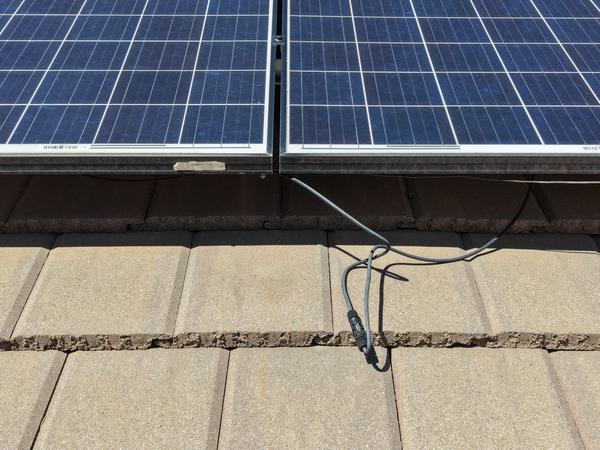
Exposed DC Wiring — Probable Ground Fault Contributor
Close-up showing DC wiring between panels resting directly on the concrete tile surface, with the MC4 connector sitting exposed and unsecured rather than being routed through proper conduit or wire management clips. In a system experiencing recurring E018 ground fault codes, this type of exposed wiring in direct contact with the roof surface is a likely contributor to the fault condition — particularly when moisture, debris, or degraded insulation allows current to leak from the conductor to the grounded racking or roof structure. This wire carries high-voltage DC whenever the sun is shining, regardless of whether the inverter has tripped offline.Summary of Code Violations and Deficiencies
| Deficiency | Standard Violated | Severity | Consequence |
|---|---|---|---|
| No metal flashing at any roof penetration | California Title 24 §1507.3; TRI Installation Manual §6.3 | HIGH | Water intrusion at every mounting point for 15 years; underlayment and deck damage likely |
| Abandoned lag bolt penetrations left in roof | California Title 24 §1507; IRC R903.2 (weather protection) | HIGH | Purposeless holes sealed only with degraded mastic; direct water entry path to roof structure |
| Mastic sealant used in lieu of approved flashing | TRI Concrete Tile Installation Manual; RCMA guidelines | HIGH | UV degradation of mastic over 15 years leaves penetrations effectively unsealed |
| DC wiring unsecured on tile surface | NEC Article 690.31 (wiring methods); manufacturer install specs | HIGH | Abrasion, moisture contact, and insulation degradation contributing to ground faults |
| Tile displacement around mounting points | TRI tile alignment and weatherproofing standards | MEDIUM | Misaligned tiles create gaps that channel water toward penetrations |
| No module-level rapid shutdown | NEC 690.12 (2014+); not retroactive to 2011 installs | MEDIUM | High-voltage DC remains energized on roof during and after ground fault events |
The Compounding Failure
The roof installation deficiencies and the ground fault crisis are not independent problems — they are causally linked. The missing flashing and abandoned penetrations have allowed 15 years of water intrusion into the space beneath the panels. This moisture, combined with UV-degraded mastic, debris accumulation, and unsecured wiring resting directly on wet tile surfaces, creates the exact conditions that cause ground faults: insulation breakdown and unintended electrical paths from DC conductors to the grounded racking and roof structure.
This property was built in 1999 with a 50-year rated concrete tile roof. At only 27 years in, we are barely past the halfway point of the roof's intended lifespan. But the un-flashed penetrations from Sunrun's 2011 installation have potentially compromised the underlayment, roof sheathing (plywood decking), and structural framing below — damage that will only be fully visible once the panels are removed and the tiles are lifted during the tear-off.
The full extent of the roof damage is the single largest unknown. If the tear-off reveals rotted sheathing or compromised rafters, the cost to restore my roof escalates dramatically — and that cost falls squarely on the party responsible for the faulty installation.
What a Proper Installation Looks Like
Per TRI and California Title 24 standards, every roof penetration on a concrete tile roof requires:
- A code-approved metal base flashing (typically galvanized steel or aluminum) installed beneath the tile at the penetration point
- The flashing must extend at least 4 inches in all directions and integrate with the existing underlayment system
- Tiles must be cut, fitted, and sealed around the flashing — not drilled through
- Any penetration through the tile surface must be sealed with both flashing and an approved sealant as a secondary barrier
- Mastic or roof cement applied directly to tile surfaces without underlying flashing is explicitly prohibited as a primary waterproofing method
None of these requirements were followed during the 2011 installation of this system. Every lag bolt was drilled directly through the concrete tile with mastic as the sole barrier to water.